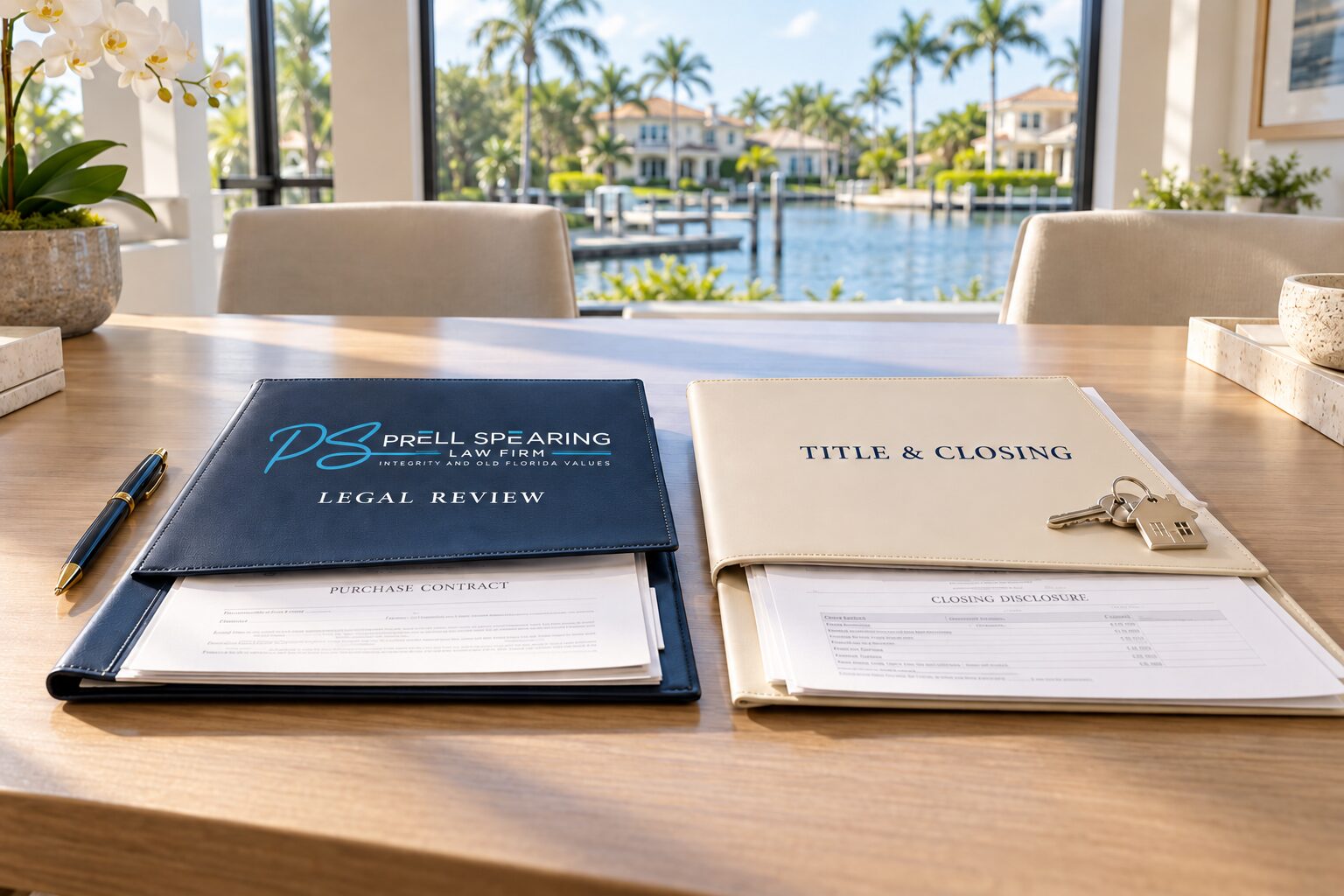
Real Estate Attorney vs. Title Company in Naples: A Straight Answer From Someone Who’s Both
I get this question constantly, from both sides of the closing table: do I need a real estate attorney, or is a title company enough? The honest answer is that it depends on the file, not on which option sounds more thorough or more expensive. Title companies close the overwhelming majority of Naples transactions competently […]
I get this question constantly, from both sides of the closing table: do I need a real estate attorney, or is a title company enough?
The honest answer is that it depends on the file, not on which option sounds more thorough or more expensive. Title companies close the overwhelming majority of Naples transactions competently and efficiently. But a title company and a real estate attorney aren’t doing the same job, and the difference tends to matter most exactly when you didn’t expect to need it.
I’m in an unusual position to answer this one honestly: I own Esquire Land Title, a licensed Florida title agency, and I’m also a real estate attorney at Spearing Law. I see both sides of this decision every week, and I’d rather walk you through the real tradeoffs than tell you the model I happen to run is always the right answer.
What a title company actually does
A licensed Florida title agency handles the mechanics of getting you to a clean closing: ordering and reviewing the title search, preparing the title commitment, coordinating with your lender and agents, holding and disbursing escrowed funds, conducting the closing itself, recording the deed and mortgage, and issuing your title insurance policy.
Florida law lets either an attorney or a licensed title agent handle a closing. Practicing Florida attorneys in good standing are exempt from the individual title-agent licensing requirement (Fla. Stat. § 626.8417); a title agency owned by an attorney, like mine, still has to be separately licensed and appointed as an agency. For a clean file with a standard contract and no surprises, a good non-attorney title company can close it well, often at a lower cost.
Where a title company’s job stops
A title company’s role is to satisfy the title insurer’s underwriting requirements and get the transaction closed — not to protect your interests against the other side of the deal. That’s not a knock on title agents. It’s just not what they’re licensed or retained to do.
If your title search turns up an open permit, an unreleased lien, or a probate issue, a title company will tell you it’s there. Whether you should demand it be cured, accept it, renegotiate price, extend your closing date, or walk away is a legal judgment call, not a title-processing one. Same with a dispute over who pays an association assessment or a repair credit — someone has to read your contract and tell you what it actually says, and that’s outside a title agent’s role.
What changes when I’m your attorney, not just your closing agent
When I’m retained as counsel rather than closing agent only, I can review or negotiate your contract before it’s binding, explain what your financing and inspection deadlines actually mean, evaluate a title exception instead of just flagging it, resolve liens or probate issues, advise on how to hold title, and step in the moment your interests and the other side’s stop lining up.
The purchase contract, not the closing table, is where most of your rights get created or lost. By the time we’re signing documents at closing, a lot of that ground is already covered — which is why the Florida Bar’s own consumer guidance puts real weight on the contract, title exam, title insurance, and closing documents, not just the signature.
When a title company alone is genuinely enough
If your contract is standard, title is clean, financing is moving normally, and nobody disagrees about anything, you may not need much more than title and settlement services. That describes a real share of Naples closings, and I’m not going to tell you to pay for legal review you don’t need.
When I’d want an attorney in the file
Naples has its own wrinkles a lot of markets don’t: heavy condo and HOA inventory, waterfront and easement questions, buyers and sellers who live out of state most of the year, and property routinely held in trusts, LLCs, or estates instead of an individual’s own name. None of that automatically means trouble. It means more places for something to go sideways without anyone catching it in time.
I’d want a real estate attorney involved for:
condominium or HOA approvals, assessments, and estoppel issues
waterfront property, easements, or boundary and survey questions
property held in a trust, LLC, or estate
prior liens, judgments, or a divorce affecting title
open permits or unpermitted work
foreign buyers or sellers, including withholding requirements
a genuine disagreement over deposits, inspections, or repairs
Title insurance protects you against certain covered title defects, subject to the policy’s terms and exclusions (DFS’s guide to title insurance is a good primer). It doesn’t tell you whether the contract you’re signing is favorable, whether a land-use restriction is livable for you, or how to resolve a dispute that isn’t a title claim at all. Those are legal questions, and title insurance was never built to answer them.
An attorney’s presence doesn’t automatically mean the attorney represents you
I want to be direct about this, because it gets glossed over industry-wide: an attorney acting as a title or settlement agent is not automatically your personal lawyer. I can be involved in a closing as a neutral agent without representing either buyer or seller, and I can’t represent both sides once their interests actually conflict.
The same applies to my own two businesses. When Esquire Land Title closes your transaction, that engagement, on its own, is not an attorney-client relationship with me or with Spearing Law, and I’m not acting as your lawyer in that role. If you want me as your attorney, not just your closing agent, that’s a separate engagement, and I’ll tell you plainly when that’s the case and when it isn’t. Ask any closing provider, attorney-owned or not, who they represent and whether legal review is actually included in the fee. You’re entitled to a straight answer.
Questions worth asking before you pick a closing provider
Is the title agency licensed and appointed in Florida?
Who is actually examining the title commitment and its exceptions?
Is a Florida real estate attorney available if something legal comes up?
Does that attorney represent me, the other side, the lender, or just the closing itself?
Is contract review included, and does it happen before I sign?
Who handles liens, probate, trust documents, or a boundary dispute if one shows up?
What are all the fees, not just the title insurance premium?
What protects my escrow funds and wire instructions?
Who do I call if a problem surfaces after closing?
When do I actually receive my owner’s title insurance policy?
You’re generally free to shop for your own title and closing provider, subject to your contract and any lender requirements — the CFPB’s guidance backs this up.
The bottom line
This isn’t a question of a good attorney closing versus a bad title company closing. Plenty of title agencies do excellent work. The real question is whether your transaction needs title and settlement services only, or needs legal judgment behind it too.
If your closing is simple, a solid Naples title company will serve you well. If your contract is unusual, the property is valuable, ownership is complicated, or a defect or disagreement shows up, I’d want a real estate attorney in the file — and I’d tell you that even if it weren’t my own firm.
I’m Irina Prell-Spearing. I practice real estate law at Spearing Law, and I own Esquire Land Title, so I can handle both sides of this under one roof when clients want that — and I’ll always tell you clearly which hat I’m wearing at any given point in your transaction. If you’re buying or selling in Naples or anywhere in Collier County, reach out and we’ll figure out what your file actually needs. Our Naples office is at 405 5th Avenue South, Second Floor, Naples, FL 34102.
This article is general information about Florida real estate closings, not legal advice, and reading it doesn’t create an attorney-client relationship with me or with Spearing Law. Every transaction is different — talk to a Florida attorney about yours.