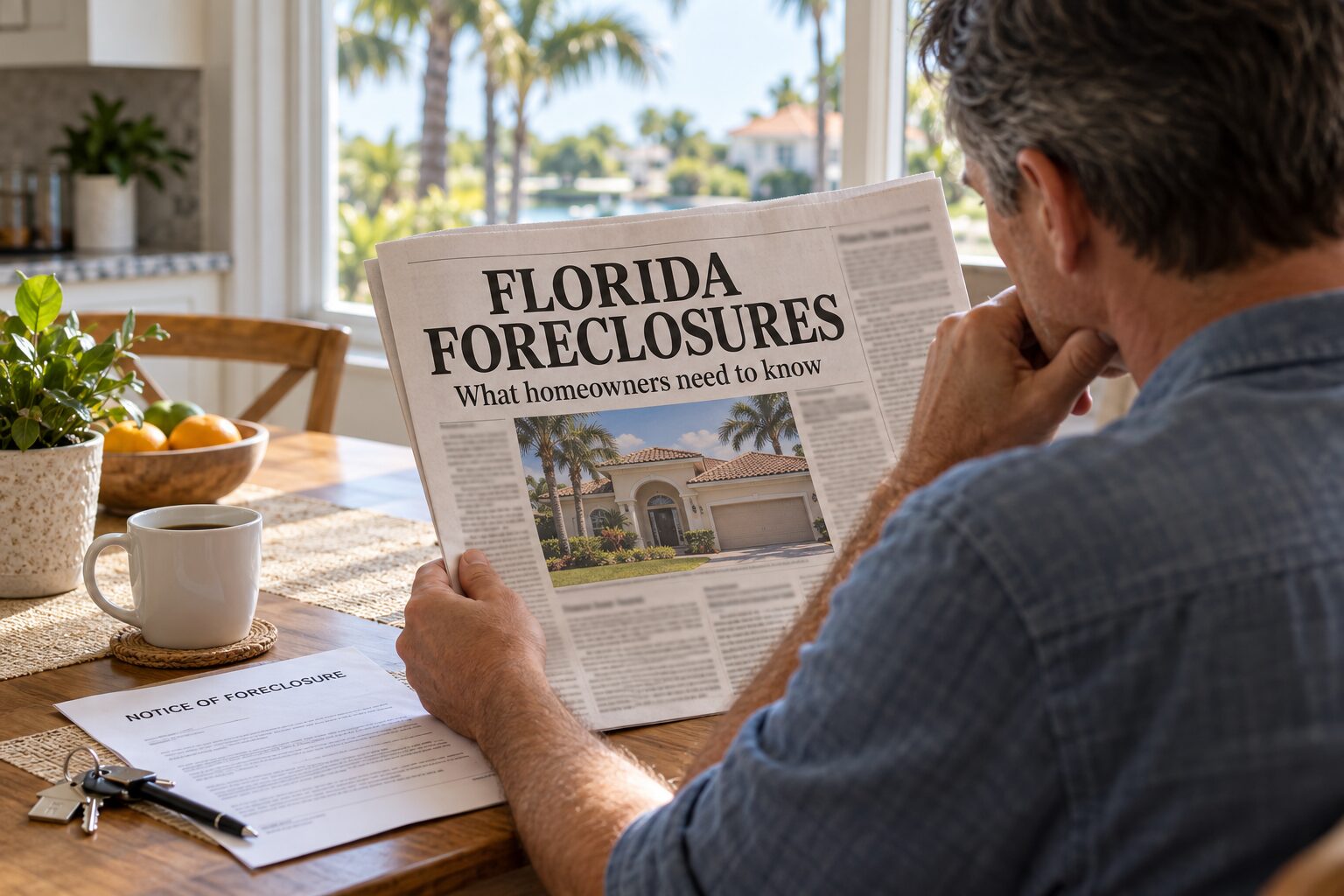
Florida Has the Nation’s Worst Foreclosure Rate. Punta Gorda Is #1. Here’s What Southwest Florida Homeowners Need to Know.
Florida posted the highest foreclosure rate of any state in the country in the first half of 2026, according to ATTOM’s midyear report: 27,494 properties, or roughly one in every 373 homes, entered some stage of foreclosure — up 33% from a year earlier. Florida trailed only Texas in raw foreclosure starts, but led the […]
Florida posted the highest foreclosure rate of any state in the country in the first half of 2026, according to ATTOM’s midyear report: 27,494 properties, or roughly one in every 373 homes, entered some stage of foreclosure — up 33% from a year earlier. Florida trailed only Texas in raw foreclosure starts, but led the nation on rate.
The numbers hit closer to home than a statewide average suggests. Punta Gorda posted the single worst foreclosure rate of any metro area in the entire United States — 0.50% of housing units. Cape Coral wasn’t far behind, landing among the worst-hit metros nationally at 0.35%. If you own a home in Southwest Florida right now, you’re not reading about a national trend. You’re standing in the middle of it.
I’m a real estate attorney at Spearing Law, and foreclosure defense and short sales are a core part of my practice — not a side offering I added because the market got bad. So I want to walk through what’s actually happening, what your real options are, and where people go wrong, without the scare tactics some firms lean on to get the phone to ring.
Why this market, why now
Foreclosure filings don’t spike for one reason. Rising insurance costs, higher property taxes after reassessments, elevated interest rates on adjustable and second mortgages, and a softer resale market that makes it harder to sell your way out of trouble are all compounding at once in Southwest Florida specifically. A homeowner who could have refinanced or sold at a profit two years ago may not have either option today. That’s a real, structural shift, not a temporary blip — which is exactly why understanding your options now matters more than it did in 2023 or 2024.
Florida is a judicial foreclosure state — here’s what that actually means for you
Unlike some states where a lender can foreclose through a notice process with no court involvement, Florida requires the lender to file a lawsuit and prove its case before a judge. That matters, because it means you have real procedural rights, and it means the single most damaging thing you can do is nothing.
Once you’re served with a foreclosure complaint, you generally have 20 calendar days to file a written response under the Florida Rules of Civil Procedure. Miss that window, and the lender can ask the court for a default judgment — meaning the case proceeds without you ever having contested anything, including whether the lender actually has the right to foreclose in the first place. Florida also has no post-sale redemption period once the property is sold at auction, so the deadlines that exist before that point are the ones that matter.
None of that means a foreclosure is automatically unwinnable, or that you should panic. It means the clock starts the day you’re served, not the day you decide you’re ready to deal with it.
Your options are broader than “fight it or lose the house”
Most homeowners I talk to think there are two outcomes: hire a lawyer to fight in court, or lose the house. In practice, there’s a wider range of paths, and the right one depends entirely on your specific numbers and goals:
Reinstatement. Paying the past-due amount, plus fees, brings the loan current and stops the foreclosure before judgment. This is the most direct fix if you have access to the funds.
Loan modification. Restructuring the loan’s terms — rate, term, or a temporary forbearance — to make payments workable again. This is a negotiation with the lender’s loss mitigation department, and it goes better with someone reviewing the offer who isn’t the one who benefits from you accepting it quickly.
Short sale. Selling the home for less than what’s owed, with lender approval, to avoid foreclosure entirely. Done right, this limits damage to your credit and can avoid a deficiency judgment for the shortfall. Done wrong — without someone who understands both the legal and the real estate mechanics — it can leave you exposed to exactly the debt you were trying to avoid.
Deed in lieu of foreclosure. Voluntarily transferring the property to the lender to satisfy the debt, typically a last-resort option when a sale isn’t realistic.
Contesting the case. Where a lawsuit has already been filed, there are legitimate defenses worth evaluating: whether the lender can actually prove it owns the note, whether you were properly served, whether the loan was serviced correctly, and whether the lender was pursuing foreclosure while a loan modification was still pending — a practice sometimes called dual-tracking, which courts have pushed back on.
The mistake I see most often isn’t picking the wrong option. It’s homeowners assuming only one of these exists, dealing directly with the lender’s loss mitigation department without independent review, and not realizing until later that a different path would have cost them less.
Why I look at this differently than a lot of foreclosure attorneys
Most foreclosure defense practices are built entirely around litigation: delay the case, raise defenses, negotiate from the courtroom. That has its place, and where a case is filed, I evaluate deadlines and defenses just like any foreclosure attorney would.
But my starting point is negotiation, not litigation — because for most homeowners, a negotiated exit costs less, takes less time, and does less damage to their credit than a drawn-out court fight that ends in foreclosure anyway. I’m also a licensed Florida general contractor and a licensed Florida real estate broker, and I own a title company. That means when I’m evaluating a short sale or a deed in lieu, I’m not just reading the legal terms — I understand what the property is actually worth, what a buyer’s inspection will turn up, and what it takes to actually get a deal to closing. That combination isn’t common, and it changes what I’m able to tell a client about which option genuinely serves them.
If you’ve received a notice, do this now
Read the deadline, don’t estimate it. If you’ve been served with a lawsuit, count the 20 days from the date of service, not the date you opened the envelope.
Pull your loan file. Original note, mortgage, any modification or refinance documents. Whoever reviews your case needs to see the actual paper, not just your account statements.
Don’t negotiate alone with loss mitigation before getting independent advice. The person on the other end of that call works for the lender, not you.
Get a case review before you assume you know your options. What made sense for a neighbor’s situation may not fit yours — the numbers are what decide it, not the general advice.
The bottom line
Florida homeowners are facing more foreclosure filings than any other state right now, and Southwest Florida — Punta Gorda and Cape Coral specifically — is at the center of it. That’s a hard fact. It’s not, on its own, a reason to assume you’re out of options. Whether the right move is reinstatement, a modification, a short sale, a deed in lieu, or contesting the case in court depends on your specific loan, your specific timeline, and what you actually want the outcome to be. That’s worth a real conversation before you decide anything.
This article is general information about Florida foreclosure law, not legal advice, and reading it doesn’t create an attorney-client relationship with me or with Spearing Law. Every situation is different — talk to a Florida attorney about yours.